lessons from house plants
patience and new growth

Over the course of the last two months, my article writing has shifted subconsciously from the last day of the month, to the first. It sounds insignificant when I actually state it aloud—that’s just one day, in practice. One day you can chalk up to distraction, procrastination, forgetfulness. But it’s been quietly intentional: not a wrap up of the month preceding but a wish for the month to come. Looking ahead, instead of looking back. It reminds me of when I gently but emphatically told my body I didn’t really want to bleed on the full moon anymore, I’d prefer to shed during the new moon. Eventually, my insides shifted. It’s a gift, to bleed when you want to. Write when you want to. Anyone who knows me knows these things are intrinsically connected in my body.
So, bleeding. Writing. February was blistered in both, but also in so many other things: Blake left town for a family emergency, I stopped sleeping well, I painted a bathroom, I kept staying out until 3am, I did a Friday the 13th tattoo pop up, I taught multiple writing workshops, three of my stories were accepted to publications, I drank too much at an industry party, I went to so many concerts, I ran the LA Spartan Race, I danced on the floor and bruised my knees. I bled, I wrote. But not as much as I wanted to write.
In short, fire horse came and I hit the ground running. I did a lot. Too much, maybe. I’m still trying to figure out the balance between living the life I want to live, full of freedom and friends and fire, without burning myself out entirely. I’m still trying to navigate how to feed myself, fuel myself, but also take that food and fuel and sit in it, write with it. It’s a tough learning process—I spent five years in the woods, I don’t remember how to live somewhere rife with constant temptations. Places to go, things to see, people to love. I always want to eat until I’m sick, but now I can. Like the baby year, a newborn foal, I’m still learning to run without toppling over and graze without gorging. Learning how to say yes, but also how to say no.
As a result I’m still feeling the effects of my February—everything hurts, I’m sleeping an absurd amount of hours now that I can sleep again and start to lose consciousness at ten pm even after caffeine. Midday I lose steam and feel like I need to lay down in bed. This never happens to me, I’m unused to not having an endless store of energy to burn, and burn, and burn. But now I’m living a life where I can actually expend that vast, crazy store I have. It’s hard not to just do it all the time. To remind myself to pause, test the reins, make sure the horse of my body still has a bit in its mouth.
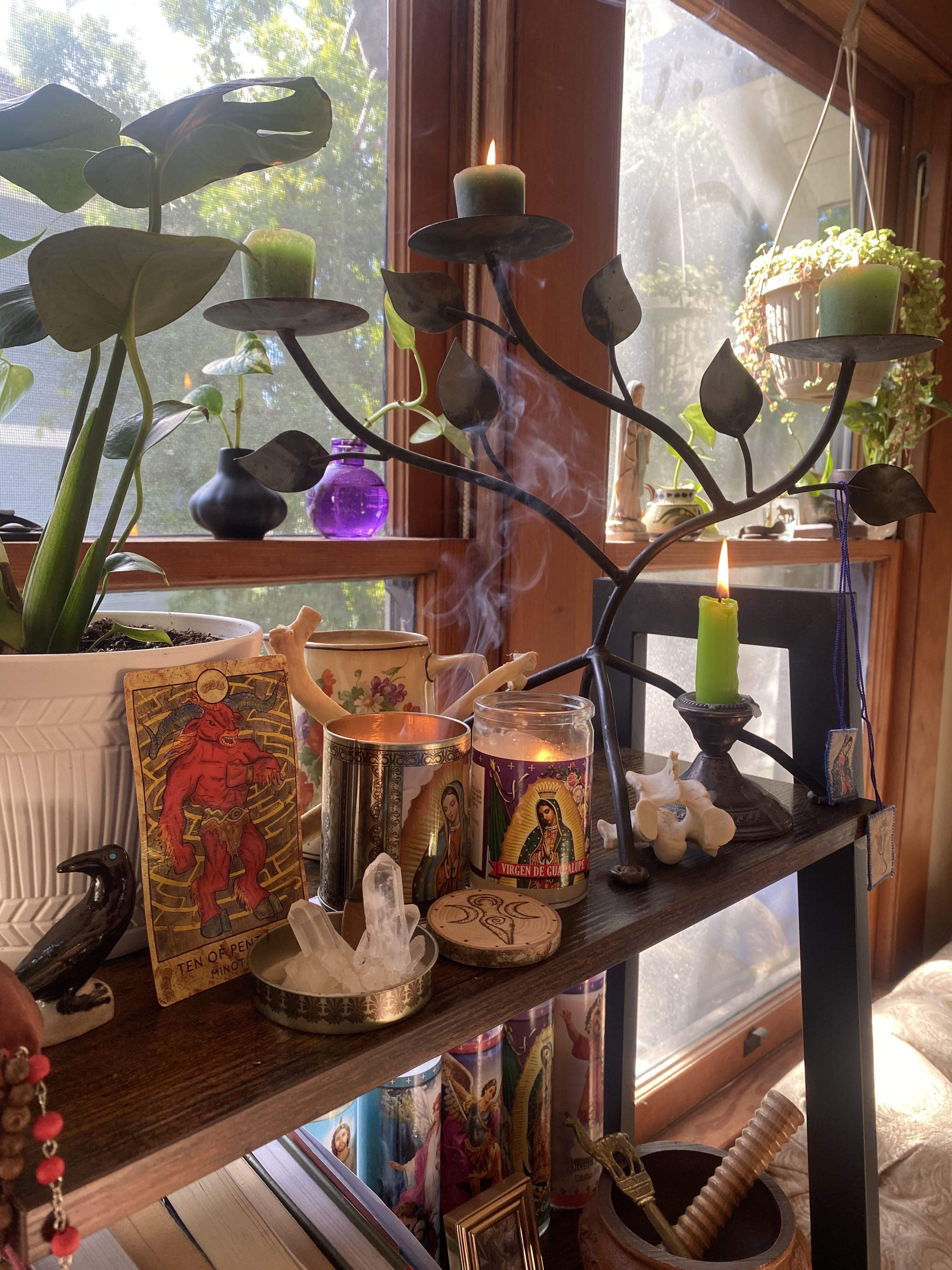
My house plants have been helping me a lot. I know that sounds so silly and cliche, and I am admittedly a little embarrassed to join the ranks of female millennials profoundly changed by caring for their house plants, especially after living on a literal farm and being responsible for so many more growing things on a much grander and more meaningful scale. Like—why didn’t I learn about slow, careful growth and the daily practice of tending when I had a vegetable garden and goats?!
But like all lessons, it came when I was ready, not when I wanted. And for some reason, it’s now that it’s hitting me: how much I benefit from taking time out of my day to check on and commune with every plant and in my care. Maybe it’s the shift in responsibility—on the farm, we had four acres of constantly changing thriving living dying land that served as home to livestock. I was deeply attuned to it all, but in a big picture way. And admittedly, my attention was split in so many directions I inevitably prioritized the fauna’s well-being, changes, growth, and needs over the surrounding flora Let alone individual flora.
But my world is smaller now. Smaller, and bigger. Smaller house smaller plot much bigger city, bigger network. And amid that drastic zooming in and out, one of the things that has been enormously grounding for me is the absolute minutiae of my house plants teeny tiny growth and quiet thriving.
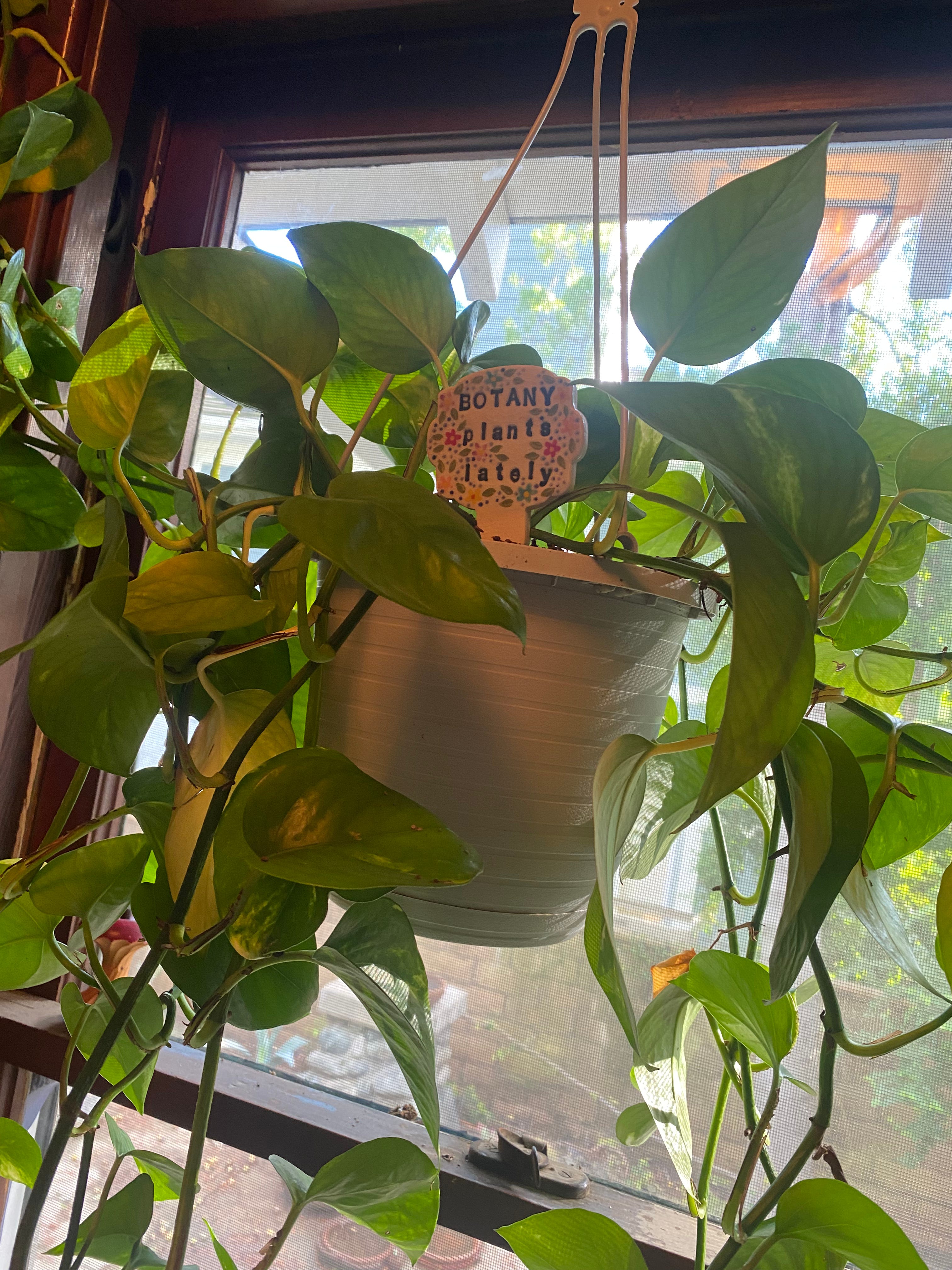
We started with two pothos: a variegated and golden variety. They were some of our very first purchases amid moving in June, back when we didn’t think we’d be staying. It seemed that important, even in the context of a temporary living situation, to have plants. Something to care for, something to clear the air. For months I paid them very little mind, beyond watering them when they needed watering and moving them to sunnier spots when I noticed them drooping. They survived the summer, then began to noticeably thrive in autumn, enough I made sure my cousin house sat for me in November when we traveled so nothing died.
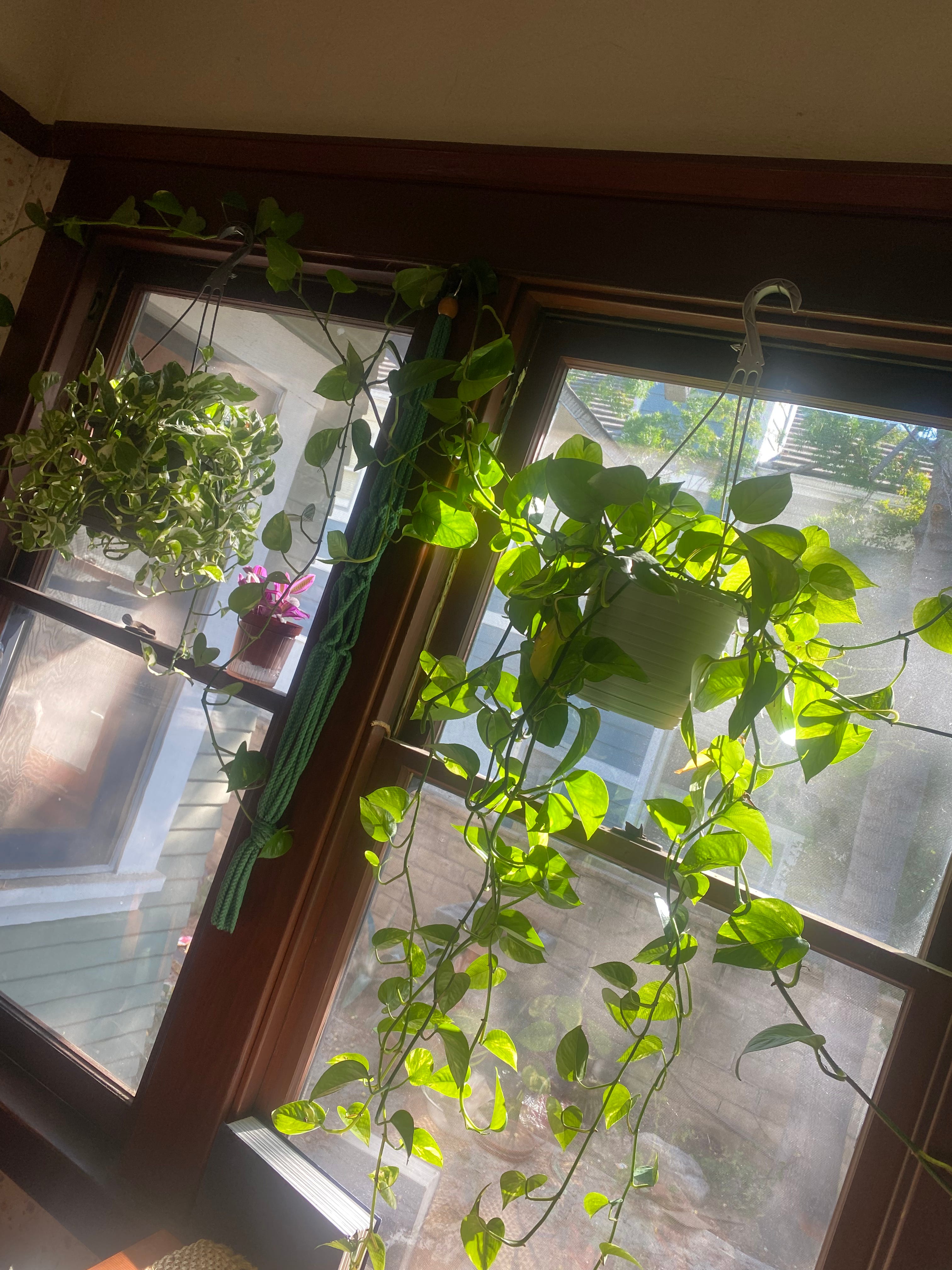
We added to the ranks— a croton, hanging ivy (which always reminds me of funeral arrangements, fitting), a syngonium. The house felt better and better the more plants we had, which we needed because it was a fucking disgusting place when we first moved. Dusty, filthy, rat shit and torn paper and rotten food. I felt like no matter how much I cleaned the filth just moved and accumulated elsewhere—except around the plants. So we got more and more. I learned their names, which I had never done before. I researched their needs, joined reddit groups and facebook groups and took advice on repotting and watering—or discarded advice when it contradicted with my experience—which in turn, taught me to listen to my instincts. I moved them around and tracked changes, positive or negative, and adjusted accordingly. I learned to propagate, making more plants. I haven’t killed a single thing yet, which is shocking given my track record of neglecting even “easy” house plants to the point of ultimately killing them in favor of having to care for a million animals who needed me more urgently, back in the mountains.
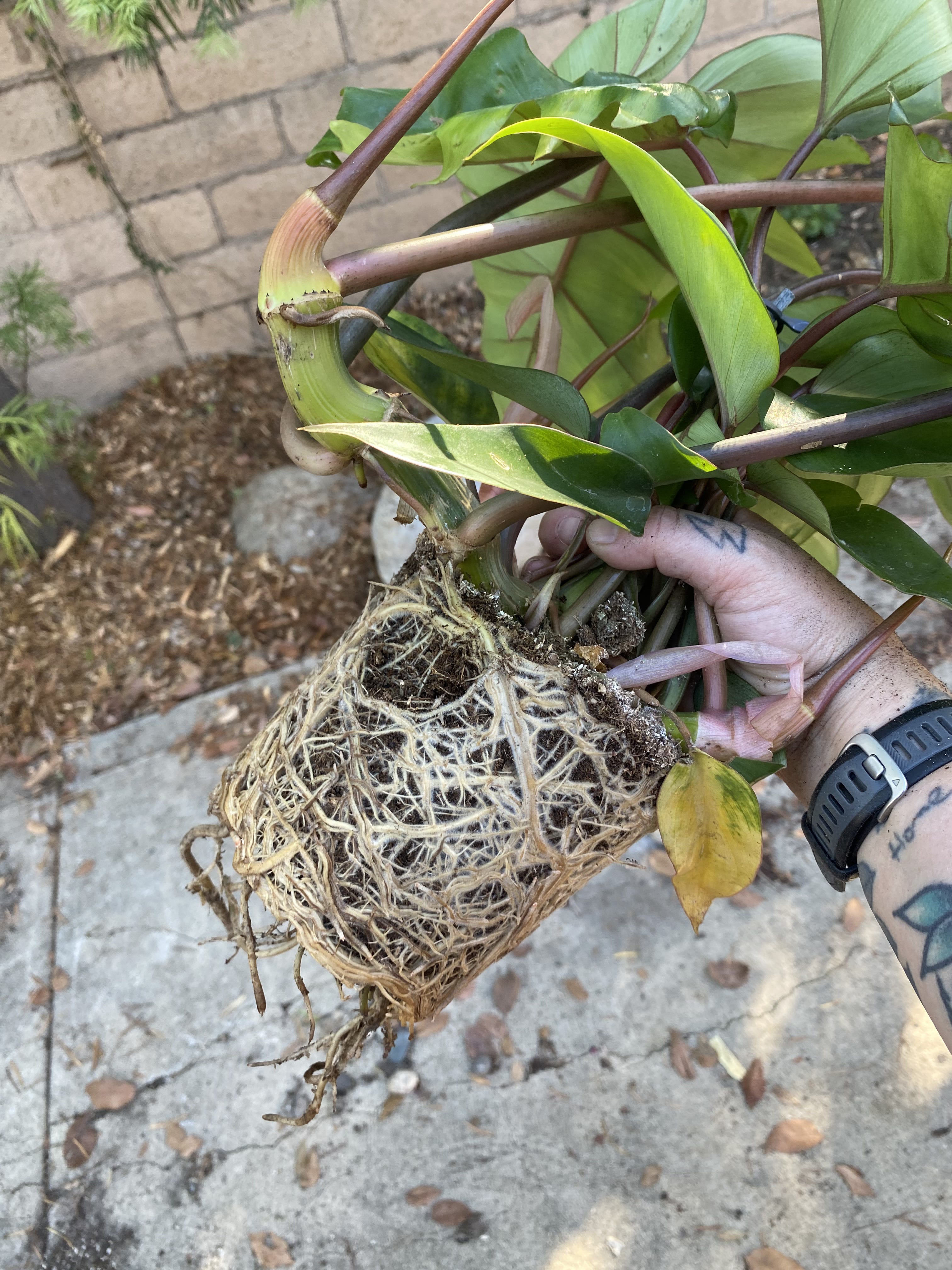
Within the last week, my frydeck and both of my monsteras put out new leaves. I was thrilled—I’d read online it sometimes took a year in a new location for a monstera to develop upper growth, as they tended to put down roots first. I got it. I also need to feel secure and grounded before I give a shit about being hot. But sure enough, both had gorgeous leaves split delicately from the stems and unfurl, pale and thin and fragile. The palest of greens, astoundingly beautiful. I’d noticed all their new roots, but it felt so moving to know they decided they’d done enough stabilizing to focus on leafs. I was honored—I did that! I cared and tended and cultivated and loved these plants so hard and so patiently they grew in ways I hadn’t even anticipated, well before my expectation.
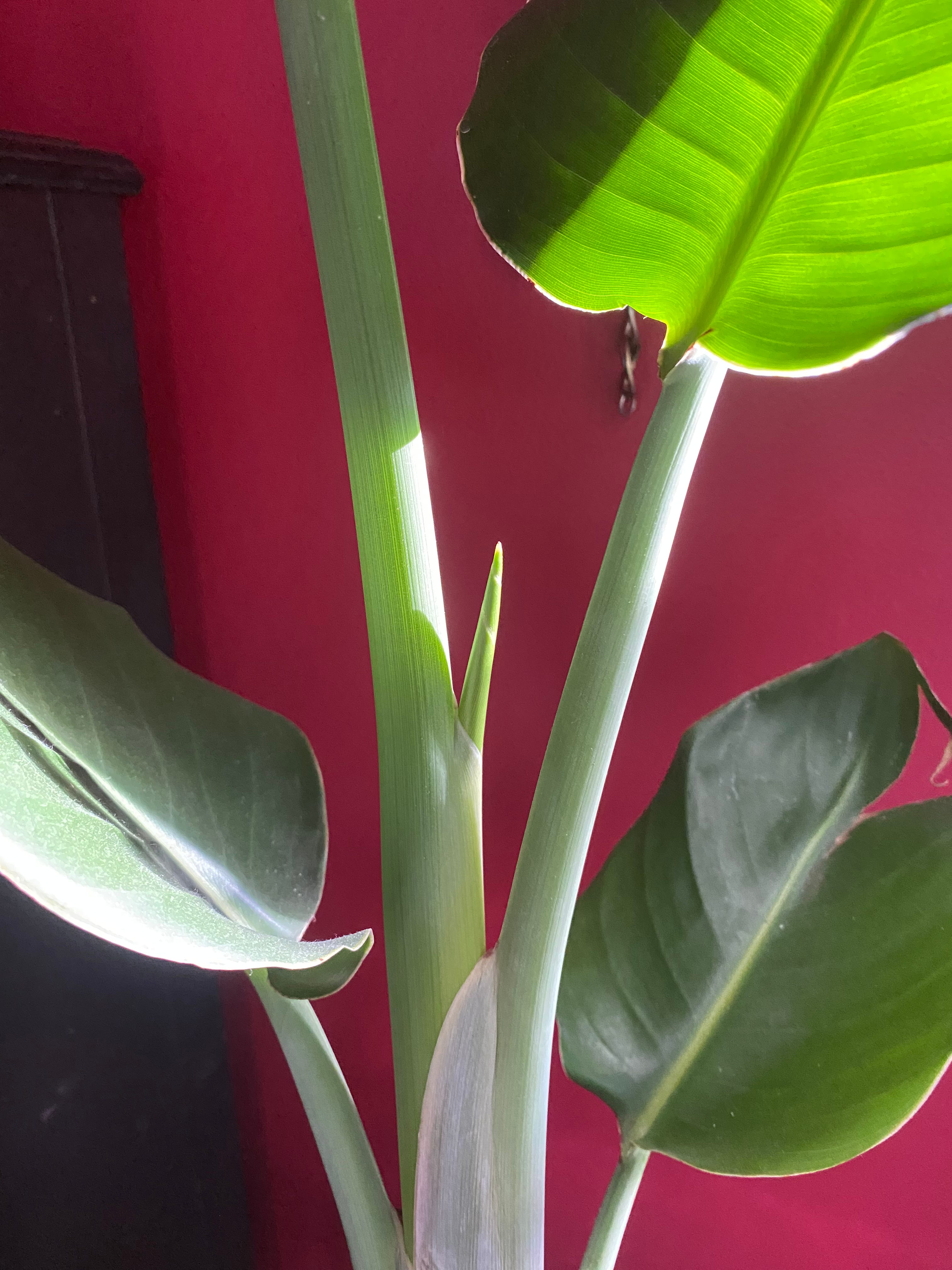
Patience is a huge, huge component to house plants. Having them means daily care and work and attention. Admiring their current state and being satisfied by it, accepting it, loving it. Then, out of nowhere: a tiny new furl. A baby leaf. I hardly noticed baby leaves on the farm, there were bigger babies to worry about. It feels like such a privilege to get so excited about a single leaf. Small, tightly furled, hard-won. The product of patience, a pearl grown from a single grain of sand tucked into the meat of an oyster. I hardly noticed my monsteras had been getting taller and bigger, because I look at them every day. So, when those new leaves did come, they were such a delight. Such a monumental surprise.
Speaking of things hard won: My best friend moved to LA last month. It was a long, terrible trial of a move, and it fought them every step of the way, but here they are. Finally, after the rainstorm when the sun came out they arrived in one piece. Last week we laid around in their bed in our underwear and scrolled our phones together, something we have never had the luxury of doing because long distance friendships are always plagued by termination, urgency, limited time. Every moment we have ever spent together has been a little sad because one of us will always go home, in the end, and back then, our homes were on opposite ends of the country. Now, they are thirty minutes away. It’s insane. It’s a joy, a delight, a monumental surprise.
“I look old,” I observed in their mirror, not in self-criticism but simple acknowledgment. “I’ve aged so much in the last year.”
My best friend asked where, I pointed to the lines through my brow, framing my eyes. She briefly cupped my face and said, “See, I look at you so much these aren’t new to me.”
Like the monstera’s creeping new height and under-the-soil roots: changes that feel minimal and invisible when you care for something every day. When you look upon it with love, and patience, and expect nothing.
As a product of careful cultivation, I am putting out new leaves, now. I feel them—they’re new and scary. I don’t know what I am doing. I burn myself out, I’m exhausted, but I am so excited. It’s a brand new excitement reserved for the smallest of things: buds, baby leaves born from close, tender observance. I am ready to be tenderly observed and to tenderly observe. I put my roots down, I am ready to become something new, and hot.
As I grow part of me wants to just go fucking crazy. And I will—I have. I ran and I ate shit and now I’m remembering that patience isn’t something to be shed, it’s part of growth, it’s part of tender observance. I have to slow down, even as I rush ahead. It seems very fitting for the current liturgical season of lent: a moment of reflection, of reservation, of asking ourselves what are we meant to do? For ourselves, for God? What is our purpose? In preparation for the miracle of resurrection.
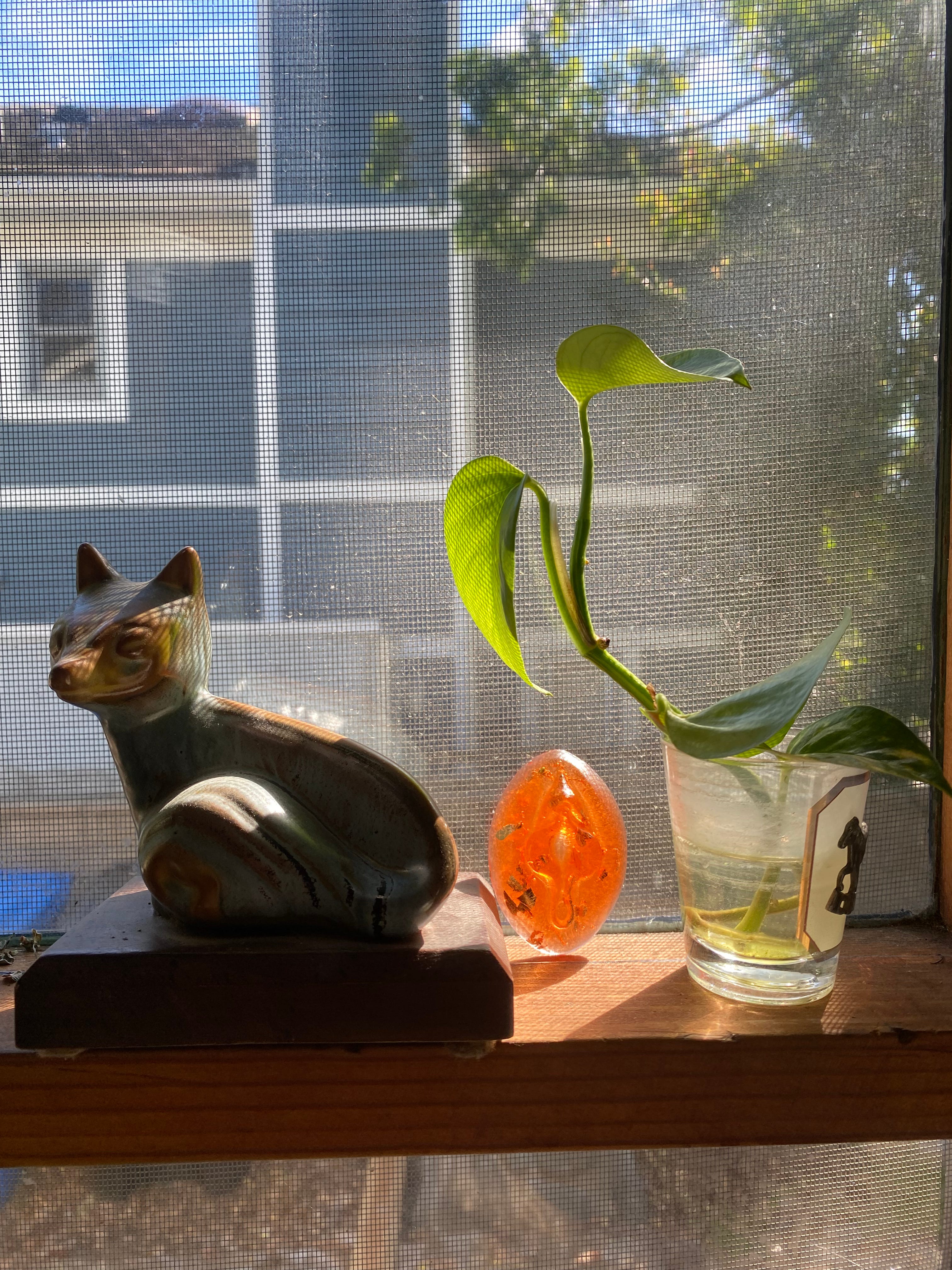
Stripped of Christian terms, this means that before a vast transformation, before we behold the eternal (and secular, if you want to look at it that way) cycle of rebirth following the inevitability of death, it benefits us to pause. To find patience. Not just for the world or our peers but for ourselves. Growing isn’t fast and it isn’t linear. It’s born from love and daily care but it’s insanely slow, sometimes. Lots of it happens underground, invisible. We have to be secure and grounded before we give a shit about being hot. And even once we’re hot—stabilization doesn’t end there. Patience doesn’t end there. To be thriving and green and blossoming and beautiful still requires that patient, careful daily practice. Tender observance. Water. Sunlight. Photosynthesis. New lines in your forehead and beside your eyes that the people who love you most already know the map of, because they look at you so much. Bleeding, and writing.